
Virginia FOIA and Virginia Beach Public Records
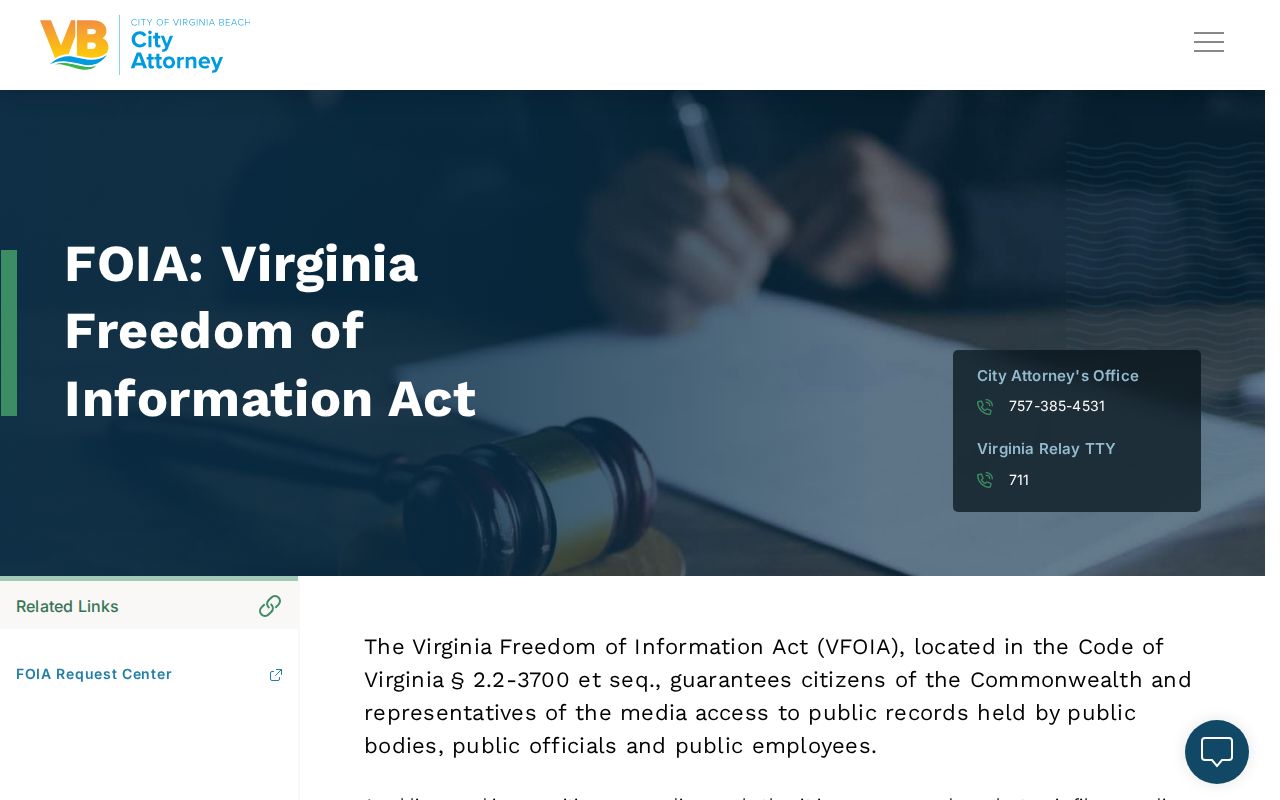
Virginia's open-records law is the Virginia Freedom of Information Act. The City of Virginia Beach FOIA page explains that FOIA, found at Va. Code § 2.2-3700 and the sections that follow, gives citizens of the Commonwealth and media a right to see public records held by public bodies, officials, and staff. The law reads "public records" broadly. It covers writings or recordings in any format that a public body prepares, owns, or keeps while doing public business. Email counts. Reports count. Meeting minutes count.
The city spells out your rights and the request steps on its Virginia Beach FOIA rights and request page run by the City Attorney.
You do not have to give a reason, and a short, specific request gets a faster answer.
The law starts from a simple rule. All public records are presumed open. A record stays open unless a statute creates an exemption, and the courts read those exemptions in a narrow way. That does not mean every file reaches the public. Some records are confidential by other laws, and court records run on a separate track explained further down. Still, the default for ordinary city files leans toward access. A person does not have to say why they want a record, and the request can be short.
The open-by-default rule comes straight from the Virginia FOIA policy statute, which states the law must be read to favor access.
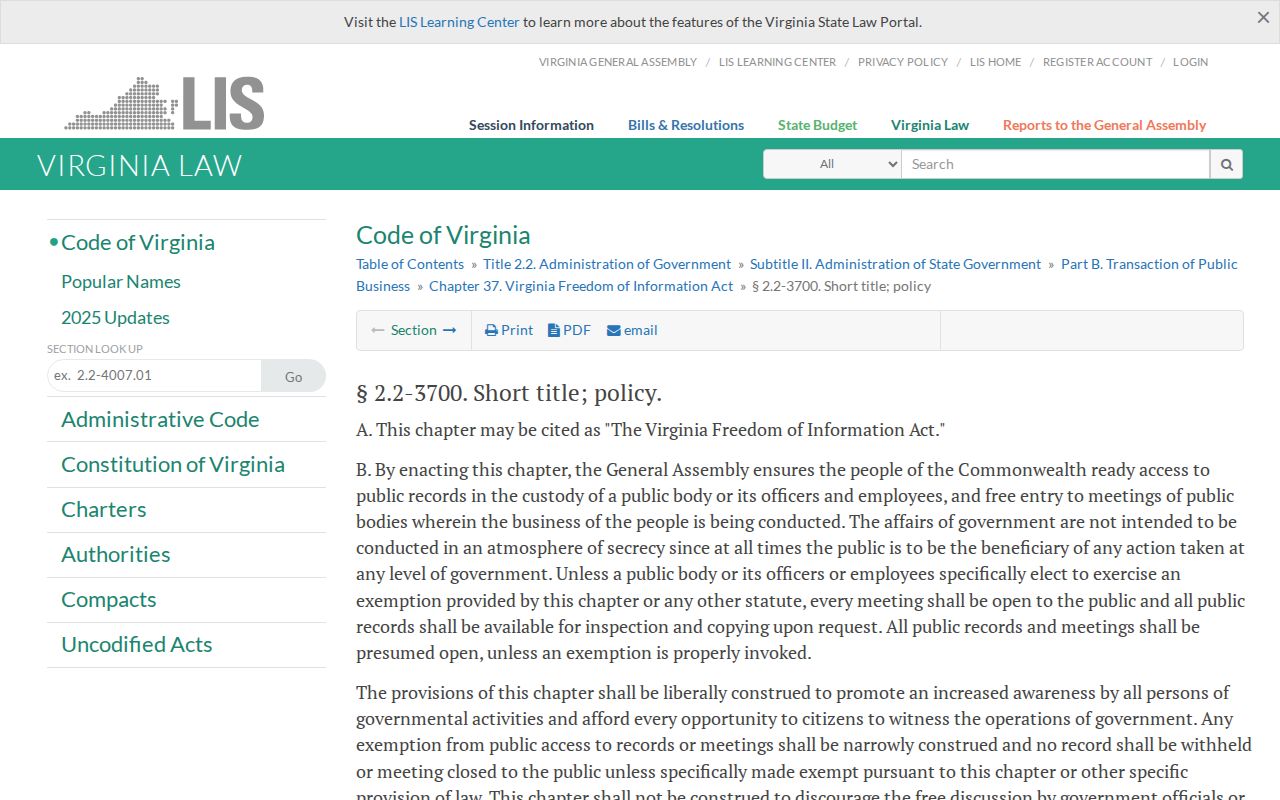
Courts read the exemptions in a narrow way, so most ordinary city files stay open to the public.
One point trips up a lot of people. FOIA is the route for city agency records, not the route for court files. The Clerk of Circuit Court holds court records under court statutes, so a FOIA request to the city will not produce a certified divorce decree or a case file. The split is worth getting right before a request goes out the door.
Court Records vs City Records in Virginia Beach
Two systems hold public information in Virginia Beach, and they do not work the same way. City agency records move through the city FOIA office. Court records sit with the Clerk of Circuit Court and the district courts under judicial access statutes. A request sent to the wrong system comes back empty or gets bounced. The table sorts the common record types so a Virginia Beach public records request lands in the right place the first time.
| Record | Where It Comes From |
|---|---|
| Certified court order or judgment | Clerk of Circuit Court (not FOIA) |
| Divorce decree, case file | Clerk of Circuit Court (not FOIA) |
| Certified marriage license copy | Circuit Court Clerk, Marriage License Division |
| Probate or will file | Circuit Court Clerk, Probate Division |
| Deed, plat, recorded judgment | Circuit Court Clerk, Land Records |
| Police report (Dec 2022 and later) | VBPD FOIA Office |
| City agency email, minutes, contracts | City FOIA office |
The court statute that matters here is Va. Code § 17.1-208. It opens nonconfidential court records to inspection and copying in the Clerk's office. It also bars the Clerk from handing out protected identifiers like Social Security and driver's license numbers. So a court file is public, but the access road runs through the Clerk under court law, not through a FOIA letter. For case lookups and copy steps, see the Virginia Beach court records page or the Clerk of Circuit Court page.
Note: A FOIA request to the city will not produce a certified court order, a divorce decree, or a case file, because those come from the Clerk under court statutes.
How to File a Virginia Beach FOIA Request
City agency records are the heart of the FOIA process. The City Attorney's office runs the city's FOIA page and points people to an online request center. The steps below track the procedure set by Va. Code § 2.2-3704, which governs how a public body must respond. A request does not need a special form, and the law does not force a person to explain the reason. Still, a clear request gets a faster answer.
The response rules and deadlines are set by the Virginia FOIA request procedure statute, which tells a public body how and when to reply.
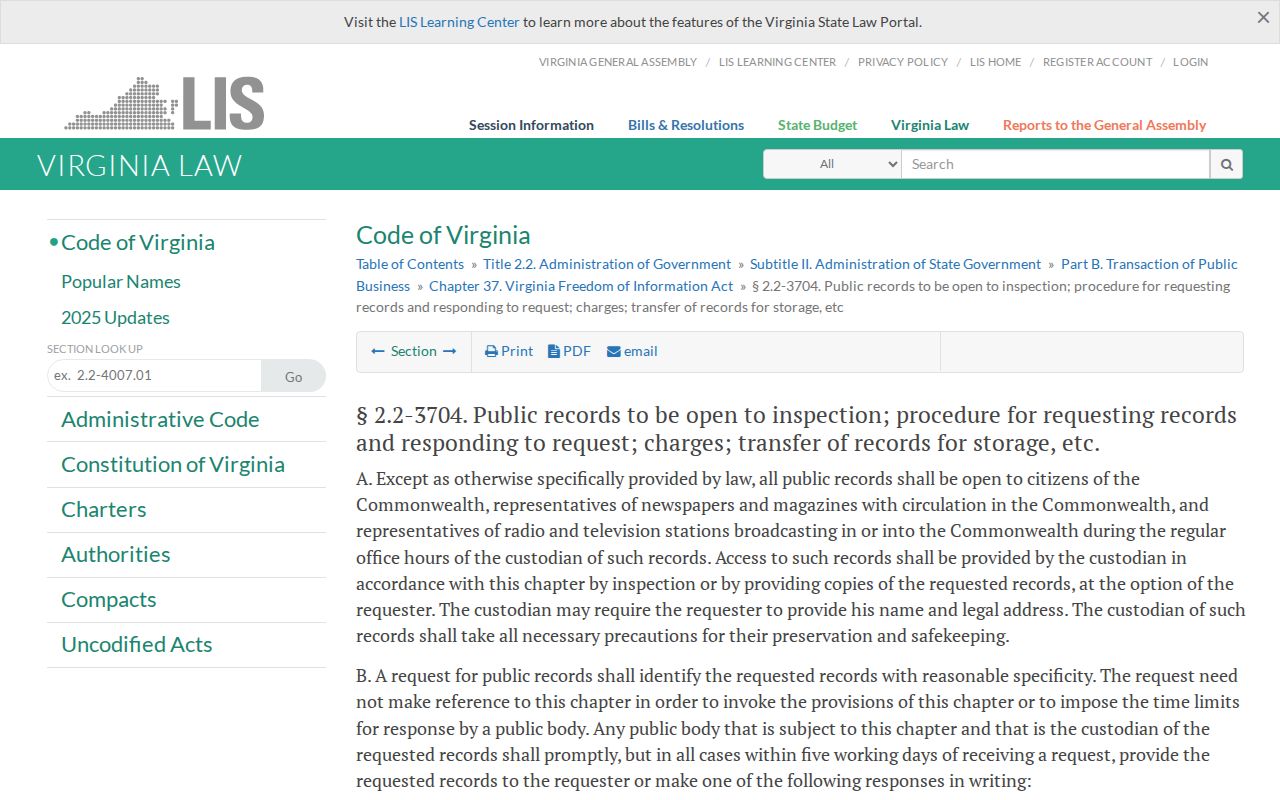
The city must respond within the set working days and may ask for estimated costs before pulling a large batch.
- Decide what record you want and which city office likely holds it. Be specific. A tight request is cheaper and faster than a broad one.
- Send the request to the city through the City of Virginia Beach FOIA page and its online Freedom of Information Center.
- State that the request is a FOIA request, name the records, and give a date range or other detail that narrows the search.
- Add your name and a way to reach you. The city may ask whether you are a citizen of the Commonwealth or a media representative, since that affects the right of access.
- Wait for the response within the statutory deadline. The city may ask for payment of estimated costs before it pulls a large batch.
- If a request is denied, the city must cite the exemption. A requester who believes FOIA rights were violated may petition a district or circuit court to compel compliance.
For a police report, the path is different. The Virginia Beach Police Department page says that for incidents reported in December 2022 and later, a person must contact the VBPD FOIA Office to request a police report. Police reports are not court records. Some investigative, juvenile, victim, or privacy-protected detail may be withheld or blacked out before the report goes out.
Virginia Beach Public Records Fees and Deadlines
Cost and timing both come from the same statute. Under Va. Code § 2.2-3704, a public body must respond to a FOIA request within a set number of working days. The city may charge reasonable amounts for finding, copying, and supplying records. The official Virginia Beach FOIA page says the city may make reasonable charges and may require payment of estimated costs before processing when those costs run over a statutory threshold. None of this is a fee for the right to ask. It pays for the actual work.
Court copy fees are a separate matter and are set by clerk and court rules, not by FOIA. The Clerk of Circuit Court charges $0.50 per sheet of paper for copies and $2.00 for each certification of an order. A certified marriage license copy is $2.50. General District and JDR copy fees follow their own pattern, with the JDR copy fee running $1 for the first two pages and $0.50 per page after that. The split below keeps the two fee worlds straight.
| Fee Type | Set By | Amount or Rule |
|---|---|---|
| FOIA search and copy charge | Va. Code § 2.2-3704 | Reasonable cost; estimate may be required up front |
| Circuit Court copy | Clerk rules | $0.50 per sheet |
| Certification of a court order | Clerk rules | $2.00 per certification |
| Certified marriage license copy | Clerk rules | $2.50 per copy |
| JDR copy | JDR rules | $1 first two pages, $0.50 per page after |
The takeaway is plain. A FOIA charge is a city cost for staff time and copies, and the deadline is fixed by state law. A court copy fee is a flat per-page or per-certification cost set by the Clerk. They do not mix.
Records Held by the Virginia Beach Circuit Court Clerk
The Clerk of Circuit Court is a constitutional officer and keeps a deep set of permanent records. Many of these are public records, but they come from the Clerk under court and recording statutes rather than through a FOIA letter. The office records and stores land records, judgments, and other quasi-legal papers for the whole city. People pull these for title work, lien checks, and proof of a recorded judgment.
Common Clerk records include the following.
- Deeds, plats, and other real estate records for the City of Virginia Beach.
- Judgment records and UCC financing statements.
- Wills and probate files admitted through the Probate Division.
- Marriage licenses and certified copies.
- Military discharge forms (DD-214) and assumed business names.
Some of these can be viewed online through Secure Remote Access to Land Records, the system defined under Va. Code § 17.1-292. That system covers deeds, marriage licenses, judgments, and wills for select courts, and it needs registration with the local Circuit Court Clerk. A casual user cannot view deed or will images remotely without setting up that access. Records not in the remote system are viewed at the public counter. One important point about filing: because the Clerk's Office is part of a court of record, it does not accept legal notices, filings, requests for information, or official correspondence by email or fax.
Sheriff and Commonwealth's Attorney Records
Two other Virginia Beach offices hold public records that often come up in a records search. Each runs its own access path. Neither is the court Clerk, and neither is the general city FOIA center, though FOIA principles still apply to many of their administrative records.
The Virginia Beach Sheriff's Office runs the Correctional Center and keeps jail custody records. The public can search the VBSO inmate lookup for people held or released. For custody status and booking detail, the Virginia Beach inmate records page walks through the tool. The Sheriff's Office also warns that scammers impersonate deputies and ask for money to avoid arrest, and it says it will never ask for money that way.
The Office of the Commonwealth's Attorney is the chief prosecutor in the City of Virginia Beach. It prosecutes people charged with breaking Virginia criminal laws and works with the Police Department, the Sheriff's Office, and the State Police. Prosecution files and victim-witness records carry their own access and privacy rules. For arrest and charge detail, the arrest records page is the better starting point, since charging and disposition data live in the court system.
The Virginia Beach Commonwealth's Attorney site outlines the prosecutor's role and its victim-witness program for the city.
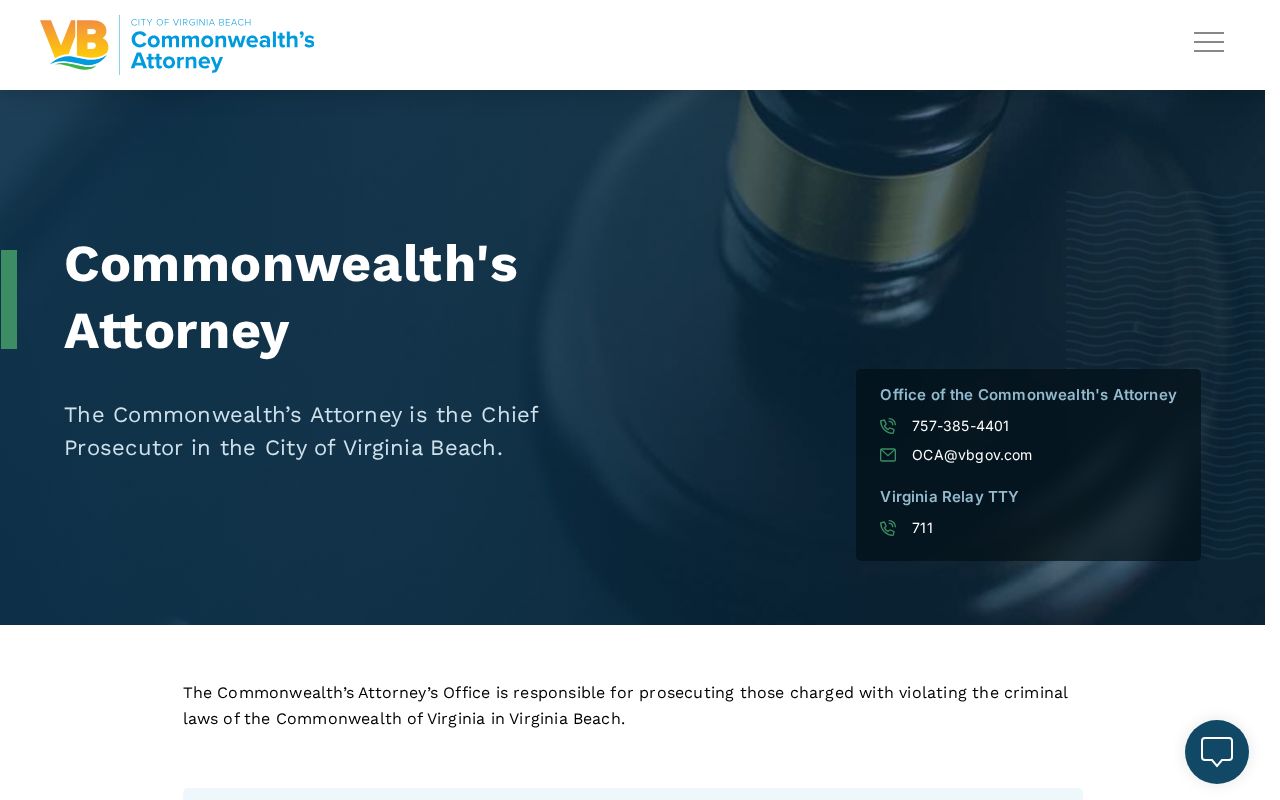
Prosecution files carry their own access rules, so not every document in a case is open to a public request.
Confidential Virginia Beach Public Records
Not every record reaches the public, even under an open-records law. FOIA itself lists exemptions, and other statutes lock certain files away. The point of the open-records rule is access by default, but several clear categories stay closed.
Juvenile court records sit at the top of that list. They are confidential under Va. Code § 16.1-305. The Virginia Beach JDR copy page confirms that juvenile dispositions are not given over the phone to the public and that juvenile inquiries need proper identification. A missing online result does not mean no case exists. Many juvenile files are confidential by law and run through the JDR Clerk with ID. Adult criminal cases work differently and may show public disposition data.
The Virginia juvenile record confidentiality statute sets the rule that keeps most juvenile court files closed to the public.
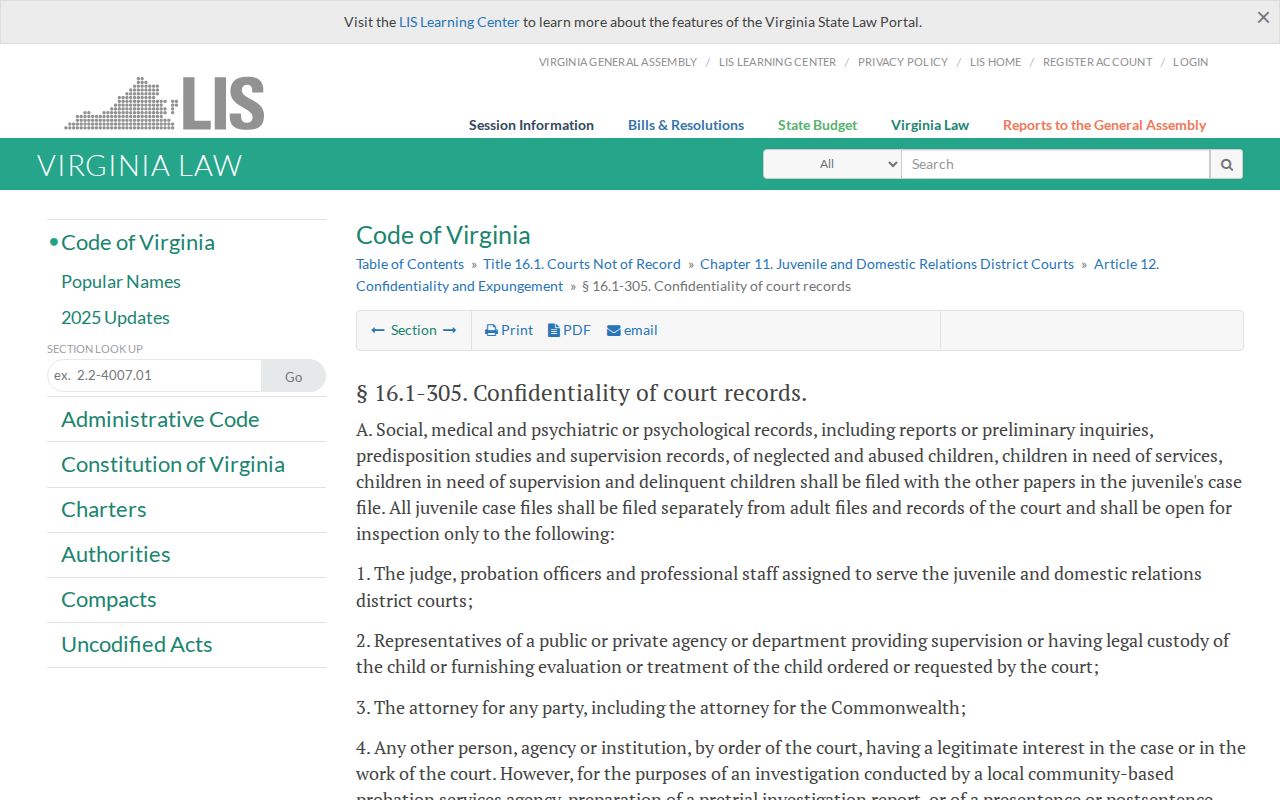
So a blank result for a minor often reflects this law at work, not the absence of a case.
Other restricted records exist too. Adoption files are sealed. Protective orders and civil commitment matters are pulled out of the General District Court online system. Sealed and expunged criminal records drop out of public access once relief is granted. Court clerks cannot release protected identifiers under Va. Code § 17.1-208. A blank screen is sometimes a confidentiality rule at work, not proof that nothing happened. When the stakes run high, confirm with the office that holds the record.
Note: A missing online result can mean a record is confidential by law, too old for the index, or sealed, so confirm with the Clerk rather than trusting a blank screen.