
How to Find Virginia Beach Arrest Records
The fastest source for a recent arrest is the Virginia Beach Sheriff's Office inmate lookup. It shows people held at the Virginia Beach Correctional Center, with booking details, charges, bond, and a release date when one applies. You can search by name or by an identifier such as a booking number. A checkbox lets you include released inmates, which matters when the person is no longer in custody. The roster is not a full arrest history, but it is the best official starting point for a current or recent booking.
Have the full name and, if you can, the date of birth. Spelling counts, so try common variations if the first search comes back empty.
- Open the Virginia Beach Sheriff's Office site and go to the inmate lookup.
- Choose a name search or an identifier search, and enter the details.
- Check "Include released inmates" if the person may already be out.
- Open a result to view booking, charges, bond, and release information.
- For the matching court case, switch to the state court portals or the court records page.
It helps to know what an arrest record source can and cannot do. The Sheriff's lookup is a custody tool, so it shows people booked into the Virginia Beach Correctional Center, not every arrest in the city. An arrest that ended in a summons with no jail booking, an older case, or a record that has been sealed or expunged may not appear. There is no single public "blotter" that lists every Virginia Beach arrest in one feed. For a complete picture, pair the jail roster with the court case portals and, where needed, an official state criminal history check.
For the full roster tool and profile fields, see the Virginia Beach inmate records page.
Arrest Record vs Criminal Court Record
An arrest record and a criminal court record describe different stages. An arrest record is created at booking by law enforcement. A criminal court record is created when the case is filed and moves through a court. The table below shows how they differ and where to find each.
| Arrest Record | Criminal Court Record | |
|---|---|---|
| Created by | Sheriff's Office and police at booking | The court when the case is filed |
| Shows | Booking, charges, bond, custody status | Charges, hearings, plea, disposition, sentence |
| Where to find it | VBSO inmate lookup | Virginia case portals and the Clerk |
| Means guilt? | No, an arrest is only an accusation | Only a conviction shows guilt |
Because the jail roster only covers people booked into the Virginia Beach Correctional Center, an arrest that did not lead to local custody, or an older case, may not show there at all. For case outcomes, the court record is the better source.
What a Virginia Beach Arrest Record Shows
A booking profile carries the identifying details and the custody facts. The Sheriff's lookup includes a photo area, basic demographics, and tables for charges, bond, and hearings. Some fields may be blank depending on the person and the case.
- Name, sex, date of birth, and physical description.
- Booking number and permanent ID, plus state, FBI, and ICE numbers where present.
- Commitment date and projected release date, which can change.
- Charge table with case number, offense date, code, description, and grade.
- Bond table with type, amount, status, and who set it.
The projected release date is marked as subject to change. It can shift due to sentence credit, new charges, a bond change, a court order, or a transfer, so treat it as an estimate, not a promise.
Charges vs Convictions
This is the single most important thing to read correctly. A charge is an accusation. A conviction is a finding of guilt. Many charges never become convictions, so a record that shows an arrest does not prove the person was found guilty. The disposition field is the one that settles the question.
| Charge | Conviction | |
|---|---|---|
| What it is | A formal accusation at arrest or filing | A guilty finding or guilty plea |
| Proves guilt? | No | Yes, in that case |
| Can it change? | Yes, it may be dropped, reduced, or dismissed | It may be appealed, set aside, or pardoned |
| Where shown | Charge field on the record | Disposition and sentence fields |
Common dispositions include dismissed, nolle prosequi, not guilty, guilty, and deferred. A "nolle prosequi" entry means the prosecutor chose not to go forward on that charge.
Virginia Beach Criminal Court Records
Once a case is in court, the criminal court record carries the full story. Felonies are tried in the Circuit Court, while misdemeanors, felony preliminary hearings, and bond hearings run through the General District Court. A felony often starts in the General District Court for a preliminary hearing, then moves to the Circuit Court after indictment, which creates records in both courts.
To pull a criminal case by name or case number, use the state court portals. The Virginia Beach court records page explains each system, and the court dockets page covers hearing dates. For warrants tied to a criminal matter, see the warrant records page.
Juvenile cases are handled differently. The Juvenile and Domestic Relations District Court hears juvenile delinquency cases and certain adult offenses involving a family or household member. Juvenile files are confidential by law, and the JDR Clerk does not give juvenile dispositions over the phone to the public. Adult criminal dispositions in that court are open and may be shared if available, but juvenile inquiries require proper identification. So a record that does not appear in a public search is not proof that no case exists. It may simply be confidential and handled at the JDR Clerk's counter.
Expungement and Sealing in Virginia Beach
Virginia does not erase most convictions. Expungement under Va. Code § 19.2-392.2 applies mainly to non-conviction outcomes such as an acquittal, a dismissal, a nolle prosequi under qualifying conditions, mistaken identity, or an absolute pardon. The petition is filed in the Circuit Court, served on the Commonwealth's Attorney, and checked against state police records. If granted, the record is removed from public access. Virginia's newer sealing law in Title 19.2, Chapter 23.2 adds automatic and petition-based sealing for some criminal history and court records, with effective dates that phase in over time.
The text of the expungement law sits on the official Virginia expungement statute page for anyone who wants the full eligibility rules.
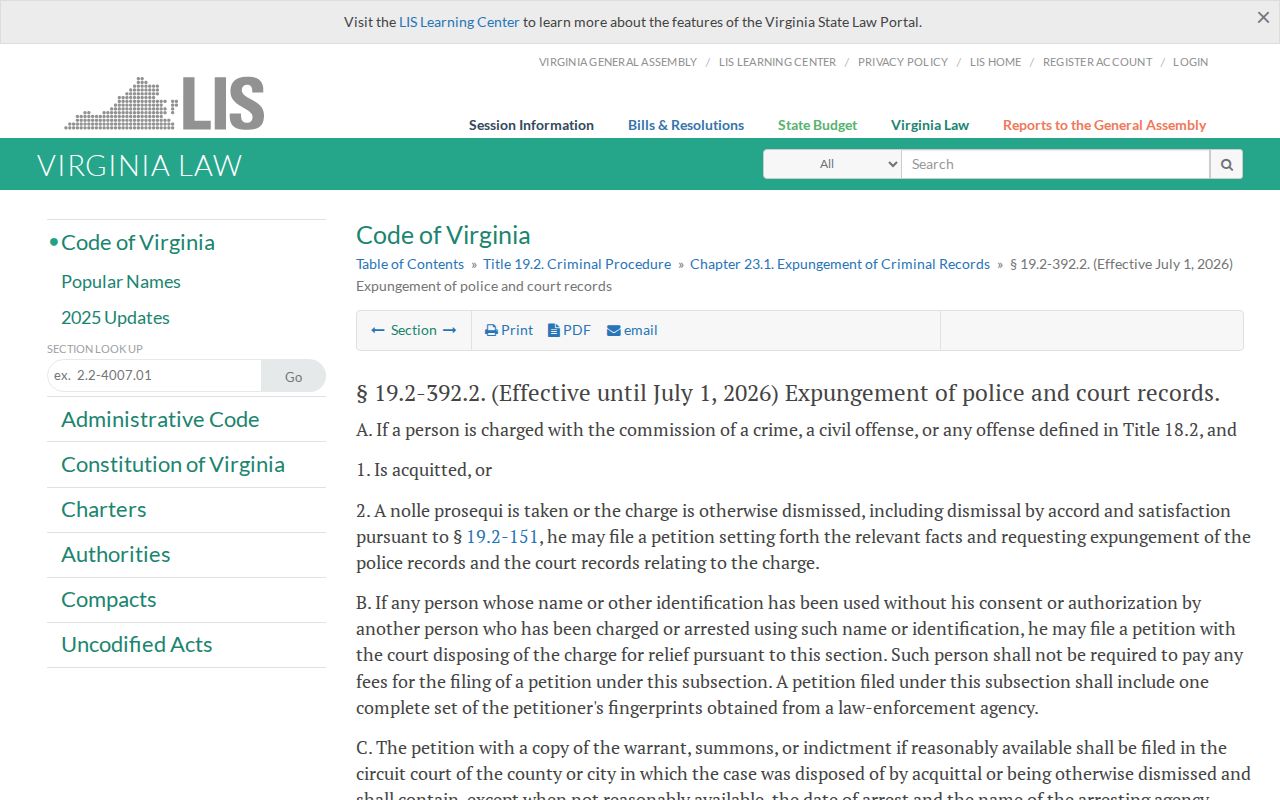
Read this section before you file, since only certain non-conviction outcomes qualify for removal from public view.
| Sealed | Expunged | |
|---|---|---|
| Record exists? | Yes, but access is restricted | Removed from public access |
| Typical use | Eligible criminal history and court records | Acquittals, dismissals, mistaken identity |
| Who may still see it | Law enforcement, courts, certain employers | Limited parties named in statute |
Even after sealing or expungement, a record may linger in private background databases, so it can need separate follow-up. Because some sealing provisions are date-sensitive, confirm current rules before relying on them.
The newer sealing rules live in the Virginia sealing of criminal history records chapter, which sets both automatic and petition-based paths with phased dates.
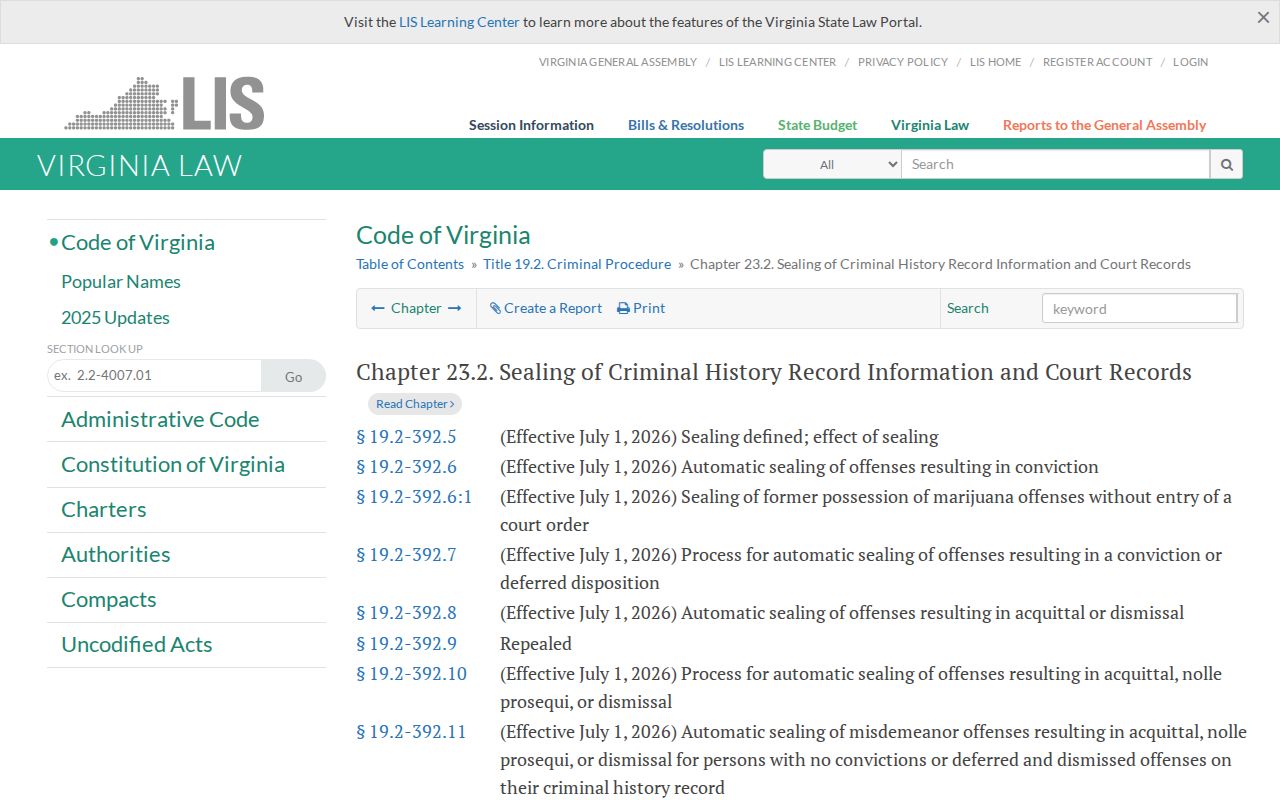
Check the effective dates closely, because a record that can be sealed today may not have qualified a year ago.
Virginia Beach Criminal History Checks
A local arrest record is not the same as a statewide criminal history. The Virginia State Police, through its Criminal Justice Information Services, maintains the central criminal record and runs official background checks. The State Police CJIS page explains how to request a criminal history and how the registry services work. Police incident reports are separate again, and for incidents in Virginia Beach from December 2022 forward, requests go through the Police Department FOIA office.
The department lays out the steps for filing and requesting Virginia Beach police reports, including which reports the FOIA office handles.
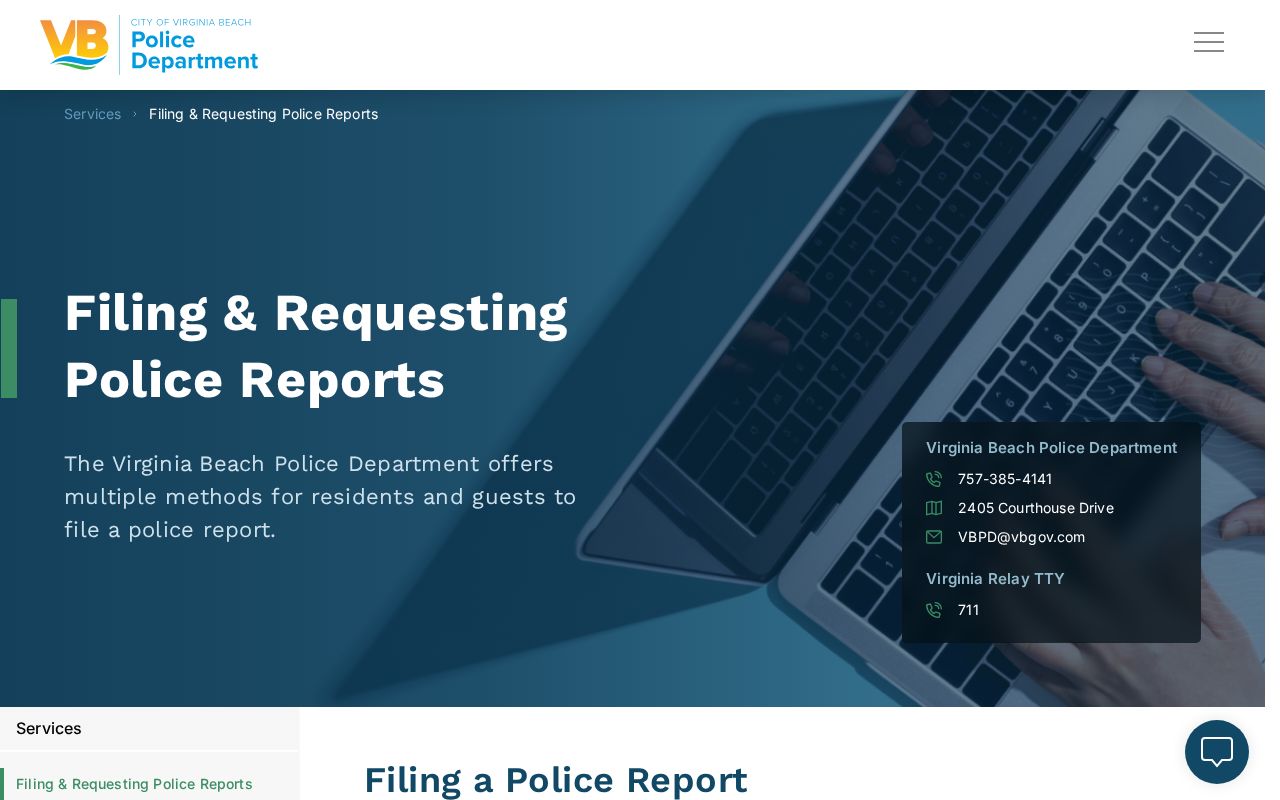
A police report is not a court file, so expect some detail to be redacted before the report is released.
For a broader look at local crime trends, the Police Department also publishes a Virginia Beach Police department data dashboard with incident and activity figures.
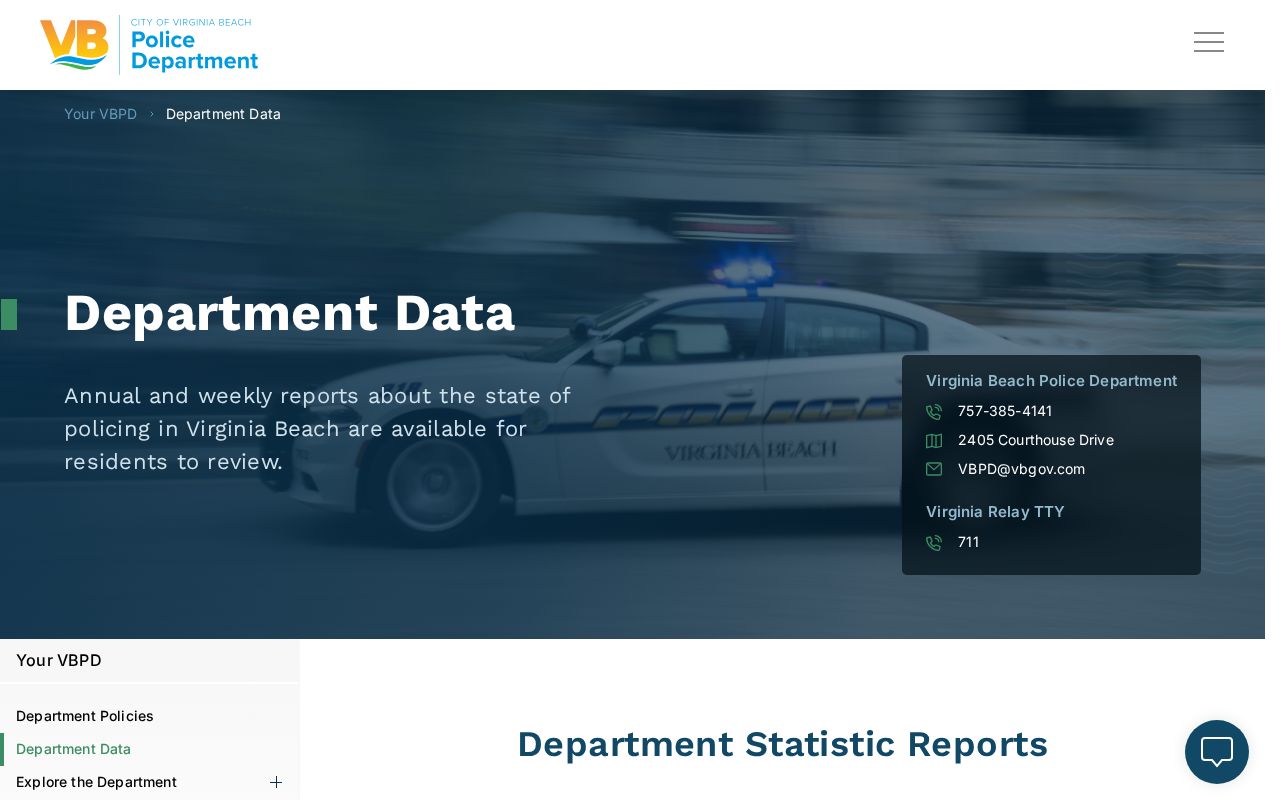
That data is summary information, not an individual arrest record, so it cannot stand in for a name-based search.
For a full statewide record, the Virginia State Police run the central index through the Virginia State Police criminal records CJIS division, which processes official background checks.
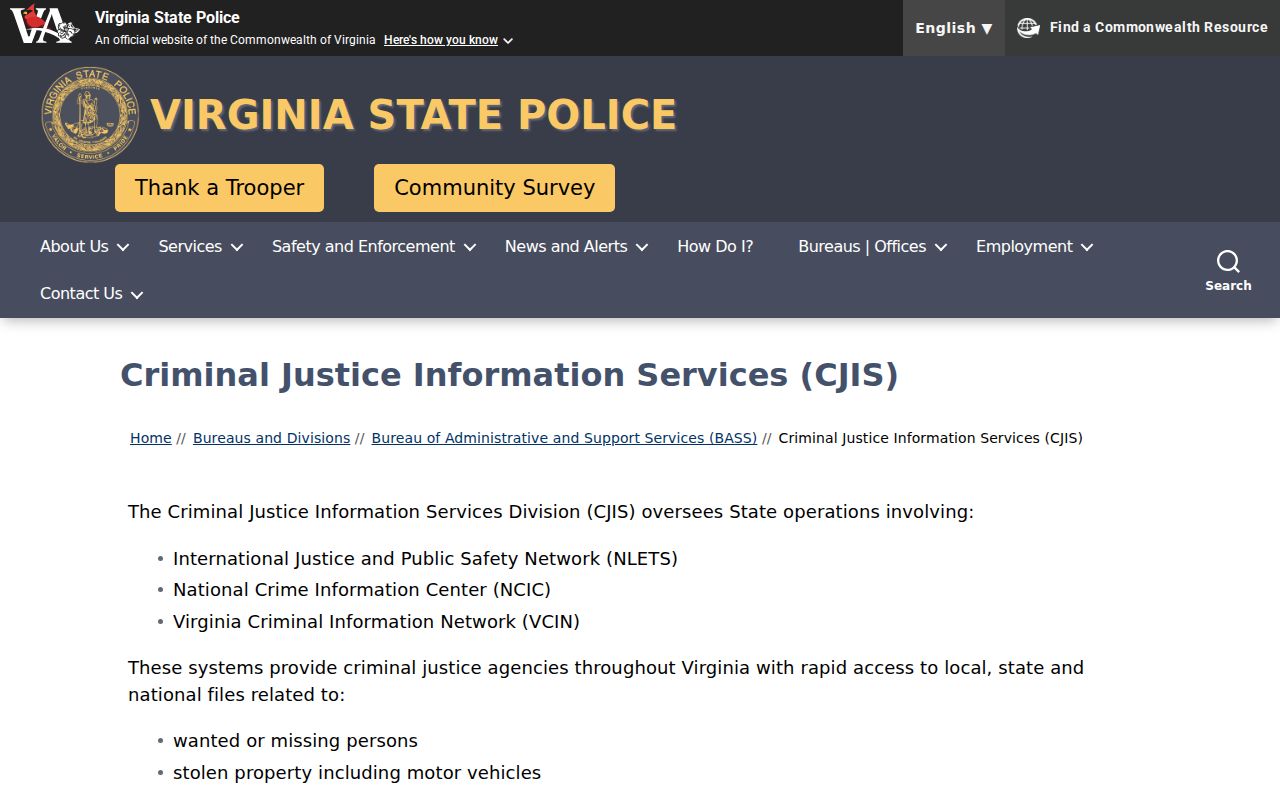
Use this official route for employment, licensing, or housing checks, since a public portal snapshot is not a complete criminal history.
For employment, licensing, or housing decisions, the official state process is the reliable route, not a screenshot from a public portal. A public records portal is not a consumer reporting agency, and arrest data found online cannot be used for credit, employment, tenant, or other decisions regulated by the Fair Credit Reporting Act. The official Virginia State Police process exists for exactly those regulated purposes, and it returns a complete, current criminal history rather than a partial roster snapshot.
Commonwealth's Attorney and Public Defender
The Virginia Beach Office of the Commonwealth's Attorney is the chief prosecutor and handles criminal cases brought under Virginia law in the city. The office works with the Police Department, the Sheriff's Office, and the State Police, and it runs a Victim and Witness program that guides victims through the court process.
For a person who cannot afford a lawyer, the public defender option is handled through the General District Court. To check qualification, a person appears at the Criminal Division no later than 10 calendar days before the court date. The cost for public defender service is a minimum of $120 per charge, in addition to fines and court costs on conviction. Anyone already assigned a public defender can call that office directly at 757-427-6050.
Crime victims have a separate path. The Commonwealth's Attorney runs a Victim and Witness program that advises victims of their rights and supports them through prosecution. Its resource list points to crisis lines and agencies, including the Samaritan House hotline, the YWCA crisis hotline, and the Virginia Sexual Assault and Domestic Violence Action Alliance. Victims who want to track an offender's custody status can also register for release notifications, which is covered on the released inmates page.
Note: An arrest is an accusation, not a conviction, so read the disposition field before drawing any conclusion about a Virginia Beach arrest record.